Sourcing Guides
How to Import Iranian Saffron: A B2B Guide for European Buyers
Step-by-step B2B guide to importing Iranian saffron into the EU: grade selection, ISO 3632 verification, supplier vetting, payment routing, EU phytosanitary compliance, and landed-cost calculation for European importers.
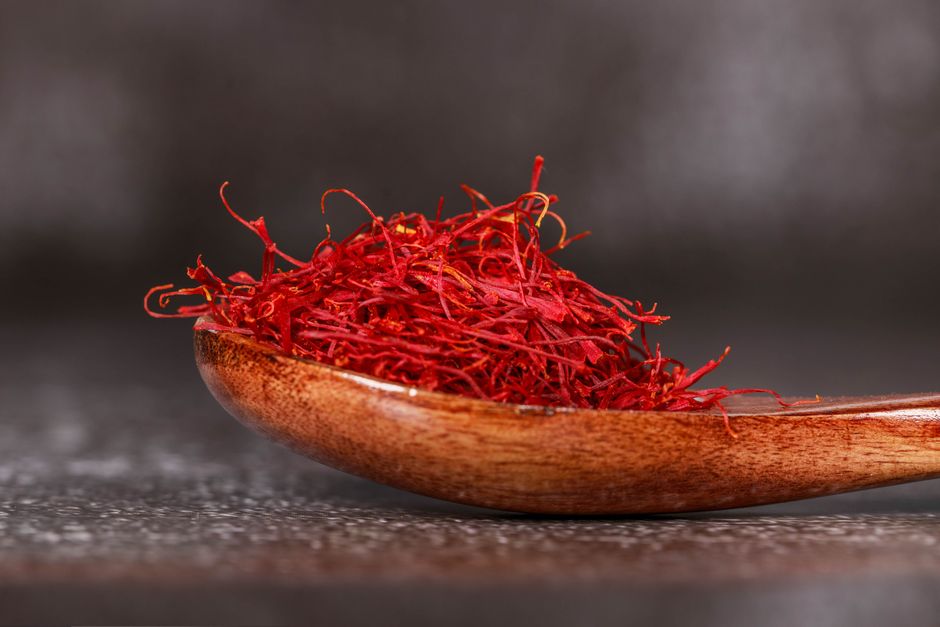
European importers buy more Iranian saffron than any other destination outside the Gulf, and the trade has matured into a structured B2B category with predictable grade specifications, lab-verified quality standards, and a documentation workflow that — once understood — is no more complex than importing any other third-country foodstuff. The friction in Iranian saffron import is not regulatory; it is the gap between what a buyer asks for and what a supplier ships, and that gap is closed by the verification discipline this guide describes. Whether you are sourcing bulk Super Negin saffron for European importers for a premium retail line or buying Sargol for an industrial colour application, the workflow below is the one we walk European buyers through.
Step 1: Choose the grade before you choose the supplier
The first decision in a saffron import programme is the grade, not the supplier. European buyers most commonly specify Super Negin (the longest, all-red, visually premium thread), Negin (long, all-red, slightly less uniform than Super Negin), or Sargol (the all-red tip, shorter threads, highest colour strength per gram). The grade determines the price band and the application fit: Super Negin for retail jars and gift sets, Sargol for industrial dairy, confectionery and extract applications where colour strength per kilogram matters more than thread length.
The grade decision is also the price decision. Super Negin trades at the top of the Iranian saffron price band; Sargol trades below it; Negin sits between. A buyer who specifies “saffron” without naming a grade will receive whatever the supplier has most profitably available that week — and for a European buyer whose customer expects Super Negin in the jar, that is the failure mode. The Iranian saffron Super Negin export sourcing page covers the grade comparison in detail.
Step 2: Require an ISO 3632 certificate before you request a price
ISO 3632 is the international standard that defines saffron specification and test methods, and it is the only objective framework that separates a real grade claim from a marketing label. The standard measures three absorbance values: crocin at 440 nm (colour strength), picrocrocin at 257 nm (flavour), and safranal at 330 nm (aroma). Genuine Super Negin and Sargol test at crocin 230-260+; lower grades land at 120-190. The EU’s Category I threshold under ISO 3632 is crocin 200, picrocrocin 70, safranal 20-50.
A supplier that cannot produce a current ISO 3632 certificate from an accredited Iranian laboratory is a supplier you should not be buying from. The certificate is batch-specific, names the laboratory, and reports the absorbance values. A supplier that quotes a price before issuing the certificate is selling on the grade name, not on the lab values — and that is the pattern that produces a container of Sargol-priced Pushal.
We attach the ISO 3632 certificate to every proforma we issue, before the buyer asks for it. A buyer evaluating multiple Iranian suppliers should ask each one for the certificate at the same time as the price quote; the suppliers that respond with certificates are the suppliers worth continuing the conversation with.
Step 3: Vet the supplier against four checkpoints
Supplier vetting for Iranian saffron is less about company size and more about operational discipline. The four checkpoints we apply:
- Facility inspection: a packing facility that is clean, food-grade, and auditable. We visit every facility we source from before the first shipment, and we share the inspection photographs with the buyer.
- Lot traceability: the supplier can identify the harvest year, the Khorasan village of origin, and the packing batch for any kilogram shipped. Lot traceability is what makes a recall possible and what makes a dispute resolvable.
- Lab relationship: the supplier uses an accredited Iranian laboratory (not an in-house test) and can issue a certificate for any lot on request.
- Export history: the supplier has shipped to the EU before and understands EU phytosanitary requirements. A supplier whose only export history is domestic or to loose-regulation markets is a higher-risk first shipment.
Step 4: Route the payment through a sanctions-compliant channel
Payment is the step where most first-time European buyers stall. Iranian banks are not directly connected to the European clearing system, which means a direct EUR payment from a European buyer to an Iranian supplier account is not generally possible. The working solutions are: a third-country bank payment (typically through a correspondent bank in a jurisdiction that clears with both sides), a letter of credit issued by a European bank and confirmed through a third-country correspondent, or — for established relationships — an escrow or counter-trade arrangement.
We walk buyers through the payment routing before we issue a proforma, because a buyer whose bank will not process the payment cannot receive the shipment. The Iran export documentation checklist for international buyers covers the payment-channel options and the documents each channel requires. The key point for a European buyer is to confirm with your bank, before you contract, that they will process a payment routed through the agreed channel — not after.
Step 5: Specify the EU phytosanitary and labelling requirements
EU saffron import requires:
- Phytosanitary certificate issued by the Iranian Plant Protection Organization, accompanying the shipment.
- Commercial invoice and packing list matching the bill of lading line by line.
- Certificate of Origin from the Iran Chamber of Commerce.
- EU labelling compliance: the retail label must list the product as “saffron” (Crocus sativus L.), the net weight, the country of origin (Iran), the batch number, and the best-before date. For organic saffron, an EU-recognised organic certificate is required.
- EU pesticide residue compliance: saffron is subject to EU maximum residue limits (MRLs) under Regulation (EC) 396/2005. A supplier that cannot provide a pesticide residue test report is a supplier whose saffron may fail an EU border check.
Some EU member states (Germany in particular) apply stricter enforcement and additional documentation requirements than the EU baseline. If your destination is Germany, ask for an additional third-party lab re-test at origin — it is cheaper than a border detention.
Step 6: Choose packaging that protects ISO 3632 values
Saffron does not require cold-chain shipping, but it is exquisitely sensitive to moisture, UV and oxygen. The export-grade packaging standard is a food-grade aluminium-lined triple-laminated pouch, nitrogen or argon flushed, heat-sealed, packed in labelled cartons. Under this packaging, saffron holds its ISO 3632 values for 24-30 months at ambient warehouse temperature below 25°C, away from direct sunlight.
A buyer who accepts a supplier’s default vacuum packaging without specifying the aluminium-lining and gas-flush is accepting a shorter shelf life and a higher risk of safranal loss in transit. The packaging spec belongs on the proforma, not in a post-shipment email.
Step 7: Calculate the landed cost before you commit
The landed cost of Iranian saffron in the EU is the FOB price plus sea or air freight, destination port handling, customs duty, VAT, broker fees, and inland transport to your warehouse. EU customs duty on saffron (HS 0910.20) is currently 0% under the EU’s general tariff — saffron is one of the few Iranian-origin products that faces no EU customs duty — which means the duty line item is zero but the VAT line item (19% in Germany, 20% in the Netherlands, 22% in Italy) applies to the CIF-plus-duty value.
The implication is that the VAT cash-flow burden is significant on a large saffron order, and a buyer should plan the VAT cash outlay alongside the supplier payment. Air freight is the default for high-value saffron because the per-kilogram saffron value makes air freight a small fraction of the cargo value; sea freight is viable for larger-volume industrial Sargol orders where the transit time is acceptable.
Step 8: Run a sample-then-contract sequence
The correct sequence for a first saffron import is: sample, lab-verify, contract, ship. We send a 50-100 g sample with the ISO 3632 certificate; the buyer may independently re-test the sample at a European lab (recommended for first-time relationships); on sample approval, the buyer and supplier sign a fixed-price proforma and the production order ships against the proforma spec. A buyer who skips the sample step to save a week is a buyer who eventually absorbs the cost of a mis-graded container.
Step 9: Plan the annual volume around the harvest cycle
The Iranian saffron harvest runs late October through mid-November. New-crop saffron enters the market in November-December, and pricing is set in those months based on harvest volume. Annual-volume buyers lock contracts in November-January, when fresh stock is abundant and lab values are at their peak. Pre-harvest pricing (May-September) is typically 10-15% above post-harvest pricing as carry-stock depletes. A buyer who can buy and hold refrigerated or ambient-controlled stock in December routinely captures the best annual price.
Step 10: Build a dispute-resolution mechanism into the contract
A saffron import contract should specify: the grade and ISO 3632 values, the packaging spec, the Incoterms, the payment terms, the shipment window, and — critically — the dispute resolution mechanism. The mechanism we use: a retained sample at our facility and at the buyer’s facility, sealed and labelled with the batch number; in the event of a quality dispute, both retained samples are tested by an agreed third-party laboratory and the result is binding. This mechanism has resolved every dispute we have encountered without litigation, because both sides agreed to it before the disagreement existed.
Putting it together
Importing Iranian saffron into the EU is, once the workflow is understood, a repeatable and low-friction process. The buyers who struggle are the ones who skip the verification steps — the ISO 3632 certificate, the sample-then-contract sequence, the packaging spec, the payment-channel confirmation — and absorb the cost of a mis-graded or non-compliant shipment. The buyers who succeed treat saffron import as a structured procurement exercise with documented checkpoints at each stage.
If you are ready to begin, the first step is a written inquiry with your target grade, volume, destination country, and any EU member-state-specific requirements. We respond within one business day with verified supplier options, an ISO 3632 certificate, and a draft proforma. Request a saffron sourcing quote and a saffron-specific advisor will pick up the file. For buyers evaluating saffron alongside other Iranian food exports, the Mazafati dates bulk import and golden almonds direct sourcing Iran verticals round out the consolidation options.
Need a quote for what you just read about?
Send us your grade, volume, destination port and certification requirements. A sourcing advisor responds within one business day.
Request a sourcing quote