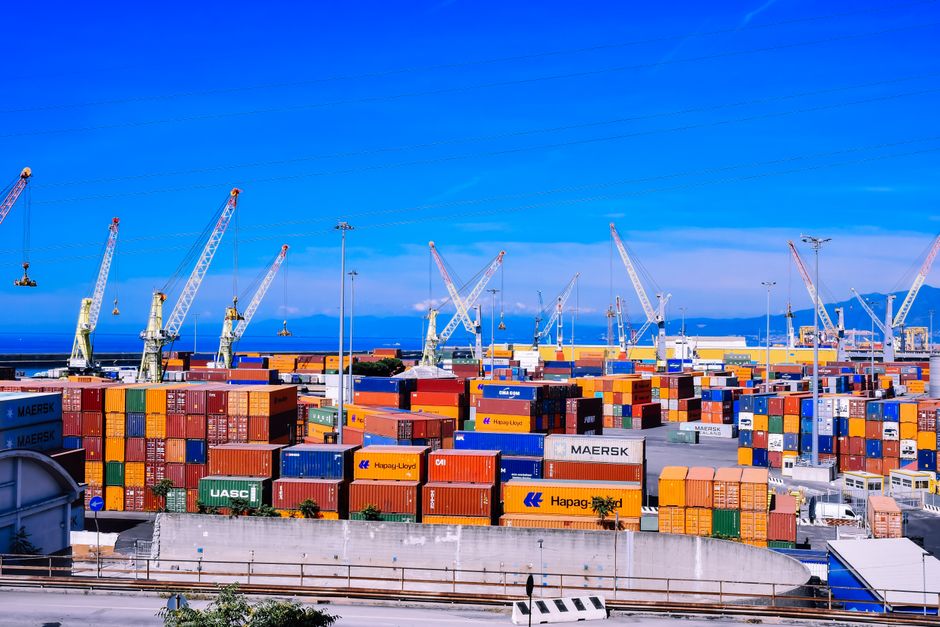
Iranian exit ports
Iran's export cargo ships from three principal port systems, each serving a different geography. Choosing the exit port is a destination-routing decision, and we select the port that produces the shortest transit and the lowest landed cost for the buyer's specific destination.
Bandar Abbas
Bandar Abbas, on the Strait of Hormuz, is Iran's largest container port and the default exit port for Gulf, South Asian, European and East Asian container traffic. The port handles the majority of our reefer (refrigerated) container traffic for Mazafati dates and the dry-container traffic for pistachios, saffron and almonds. Most major container lines call at Bandar Abbas, which gives us schedule flexibility for non-urgent shipments and the option of direct or transhipment routing depending on the destination.
Bushehr
Bushehr, on the Gulf coast west of Bandar Abbas, is the secondary Gulf port and is particularly useful for shipments to Iraqi, Kuwaiti and eastern Saudi destinations, where the shorter Gulf crossing produces a lower freight cost and a shorter transit than routing through Bandar Abbas. Bushehr also handles a portion of the stone and bitumen export traffic, where the heavy-cargo handling capability is relevant.
Anzali
Anzali, on the Caspian Sea in Gilan province, is the exit port for the overland-and-Caspian route to Russia and the CIS. Cargo from Anzali ships by Caspian Sea vessel to Astrakhan (Russia) or Aktau (Kazakhstan), or by overland reefer truck through Azerbaijan to Moscow. The Anzali route is the fastest route to Moscow for time-sensitive pistachio shipments to Russia, with a 10-14 day transit from our Urmia base to the Moscow distribution point.
Incoterms: FOB, CFR, CIF and DAP
We work with the ICC Incoterms 2020 rules, and the four terms most often used in Iranian export contracts are FOB, CFR, CIF and DAP. The choice of Incoterms is a risk-and-cost allocation decision, and we quote the term the buyer specifies or recommend the term that best fits the buyer's logistics capability.
FOB (Free On Board)
Under FOB, Palude delivers the cargo, cleared for export, alongside the vessel at the named Iranian port (typically Bandar Abbas). The buyer's nominated carrier takes the cargo from that point and bears the ocean freight and destination costs. FOB is the term preferred by buyers who have their own freight-forwarding relationships and want to control the ocean-leg cost and routing.
CFR (Cost and Freight)
Under CFR, Palude delivers the cargo to the named destination port, paying the ocean freight, but the buyer bears the cargo insurance and the destination clearance risk from the moment the cargo is loaded at the Iranian port. CFR is the term for buyers who want us to handle the ocean freight but who have their own destination broker and insurance arrangement.
CIF (Cost, Insurance and Freight)
Under CIF, Palude delivers the cargo to the named destination port, paying both the ocean freight and the marine cargo insurance. The buyer bears the destination clearance risk. CIF is the term most often used by buyers who want a single delivered-to-port price and who prefer the marine insurance to be arranged at the origin side.
DAP (Delivered at Place)
Under DAP, Palude delivers the cargo to the named destination place (typically the buyer's bonded warehouse), bearing all costs and risks up to that point except destination clearance. DAP is the term used for the overland Russia route and for destinations where the buyer wants a single delivered price to their warehouse door.
Transit times by destination
The transit times below are indicative, from vessel sailing at the Iranian exit port to arrival at the destination port. Actual transit times vary by carrier, sailing schedule and transhipment routing.
- Bandar Abbas to Jebel Ali (UAE): 5-7 days
- Bandar Abbas to Dammam (Saudi): 7-10 days
- Bandar Abbas to Mundra / Nhava Sheva (India): 10-14 days
- Bandar Abbas to Hamburg / Rotterdam (EU): 25-35 days via Suez
- Bandar Abbas to Shanghai / Qingdao (China): 30-40 days
- Anzali to Astrakhan (Russia, Caspian Sea): 5-8 days
- Urmia to Moscow (overland reefer truck via Azerbaijan): 10-14 days
- Air freight, Tehran to Europe: 3-6 days (for urgent sample and high-value shipments)
For refrigerated cargo — Mazafati dates and any temperature-sensitive consolidation — the reefer container's set-point and the data-logger record are part of the shipment specification. Our cold-chain logistics guide covers the reefer set-points and consolidation rules in detail.
Required transport documents
Every shipment, regardless of Incoterms, travels with a transport document that evidences receipt of the cargo and the contract of carriage. For sea freight, the document is the bill of lading issued by the carrier. For air freight, it is the airway bill. For overland shipment to Russia and the CIS, it is the CMR consignment note. The transport document is also the document of title for letter-of-credit transactions — the buyer's bank pays against the presented transport document and the accompanying commercial documents.
The full document set — commercial invoice, packing list, certificate of origin, product-specific certificates, transport document, and (for hazardous cargo) the MSDS and hazardous-cargo declaration — is covered in our Iran export documentation checklist. The document set is checked at origin before the vessel sails, so any discrepancy is corrected at the loading port rather than at the destination — a step that prevents the destination-port demurrage that accrues when documents are corrected by email after the cargo has sailed.
Insurance and the temperature-logger record
Marine cargo insurance is arranged either under CIF terms (by Palude, at the origin side) or under FOB/CFR/DAP terms (by the buyer, at the destination side). For reefer cargo, we arrange transit insurance through a London-market specialist marine cargo policy that covers temperature-excursion damage — the loss that occurs when a reefer loses set-point in transit. The reefer's data logger is the evidence of the temperature history and the document that supports a temperature-excursion claim. A buyer who ships reefer cargo under a general cargo policy is a buyer whose temperature-excursion loss is not covered.
For the payment-channel framework that determines when and how the transport documents are released, our payment methods for Iranian exports guide covers the working channels. To begin a shipment with the routing, Incoterms and document set defined upfront, request a sourcing quote with your product, volume, destination port and preferred Incoterms.