Petrochemicals
Iranian Polyethylene Film Grade Supplier: Methanol and Urea Fertilizer Export from Iran
Iranian polyethylene film grade supplier, methanol bulk supply Iran origin, and urea fertilizer export wholesale. Refinery-direct pricing, ASTM specs, drum/bulk packaging and export documentation for global converters and agri-importers.
- Origin
- Assaluyeh & Bandar Imam, Iran
- Minimum order
- 1 container
- Primary market
- South Asia & Africa
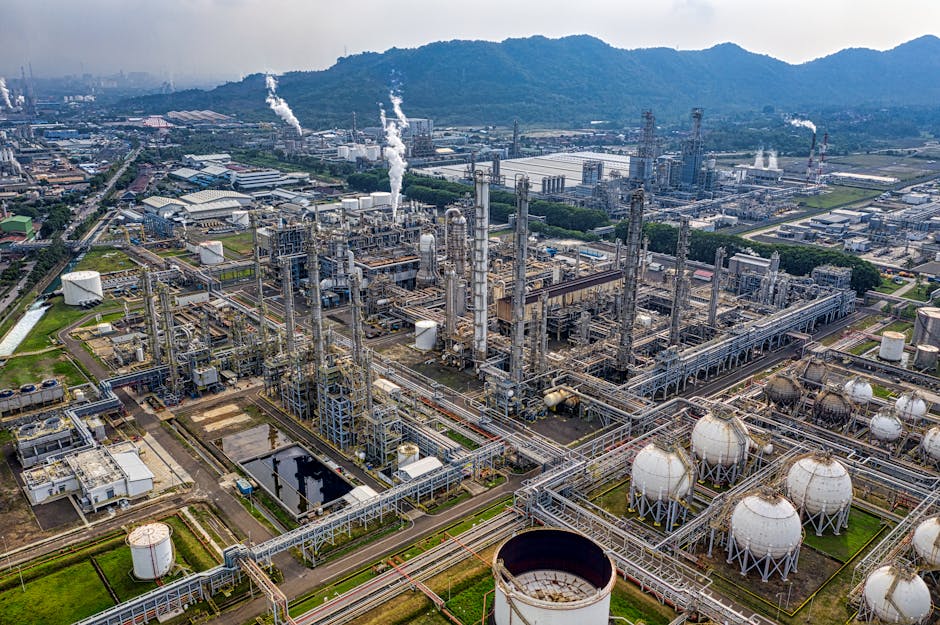
Iran’s petrochemical sector is the country’s most globally competitive industrial export after oil and gas itself. Built on the South Pars gas field at Assaluyeh and the Bandar Imam complex on the Gulf, Iranian petrochemical production covers the full light- to heavy-olefins chain, the methanol-methanol-derivatives chain, and the ammonia-urea fertilizer chain. For an international B2B buyer, the three petrochemical products most often sourced from Iran are polyethylene (film and injection grades), methanol, and urea fertilizer — and this page is the sourcing framework Palude applies to each. Whether you are an Iranian Polyethylene Film Grade Supplier buyer running a film line in South Asia, a Methanol Bulk Supply Iran Origin buyer feeding a formaldehyde or biodiesel plant, or a Urea Fertilizer Export Iran Wholesale buyer supplying a national agricultural programme, the workflow below is how the engagement is structured.
Iranian Polyethylene Film Grade Supplier: the converter’s specification
Polyethylene is the most-traded petrochemical in volume terms, and film-grade polyethylene — both LDPE (low-density) and LLDPE (linear low-density) — is the grade that flexible-packaging converters, agricultural film manufacturers, and lamination film producers buy in container-load quantities. An Iranian Polyethylene Film Grade Supplier engagement starts with the grade specification, because “film grade” is a category, not a spec.
The specification a film-grade buyer needs to issue includes:
- Polymer family: LDPE, LLDPE, or HDPE (high-density, used for thinner carrier bags and some film applications).
- Grade / melt flow index (MFI): film-grade LDPE typically runs at 0.2-2.0 g/10 min; LLDPE film grades at 0.5-2.0 g/10 min. The MFI determines how the polymer runs on the buyer’s blown-film or cast-film line.
- Density: 0.918-0.925 g/cm³ for LDPE film; 0.918-0.940 for LLDPE film.
- Additive package: slip additive, antiblock, antioxidant — and whether the additive is FDA / EU 10/2011 food-contact compliant if the film is for food packaging.
- Form: 25 kg bags (default for bagged export), 1,000 kg jumbo bags (lower per-ton packaging cost), or bulk (silo truck or bulk container for buyers with silo reception).
Iranian film-grade polyethylene is produced at Arak, Bandar Imam, Tabriz and Lorestan petrochemical complexes under grade names such as LLDPE LL0209, LDPE 2420H, and LDPE 2420D. We quote against the buyer’s spec, identify the matching Iranian grade, attach the refinery technical data sheet, and ship against the buyer’s written acceptance of the grade data sheet.
Why converters choose Iranian film-grade polyethylene
The case for Iranian polyethylene is a price-per-ton case against Saudi, Emirati and South Korean origin. Iranian film-grade LDPE and LLDPE routinely land at destination 8-18% below equivalent Gulf origin on a CFR basis, with the gap widest for LLDPE butane copolymer film grades. The quality gap is narrow — Iranian film grades meet the same ASTM D4976 and ISO 1872 specifications as the Gulf equivalents — which is why the buying decision is usually made on landed price and reliable shipping rather than on polymer chemistry.
The trade-off is payment and compliance friction. Iranian petrochemical exports run through sanctions-compliant payment channels (typically a third-country bank, letter of credit, or escrow arrangement), and the buyer’s destination bank must be willing to process a payment routed through those channels. We walk buyers through the payment routing before we quote, because a buyer whose bank will not process the payment is not a buyer we can ship to. Our Iran export documentation checklist for international buyers covers the payment and document workflow in detail.
Methanol Bulk Supply Iran Origin: the chemical-intermediate trade
Methanol Bulk Supply Iran Origin is a distinct buyer from the polyethylene converter. Methanol (CH3OH) is a chemical intermediate used to produce formaldehyde, acetic acid, MTBE, biodiesel (via transesterification), and increasingly as a fuel blendstock and marine fuel. Iranian methanol is produced from natural gas at the Zagros, Kaveh and Marjan methanol plants at Assaluyeh, and Iran is one of the world’s largest methanol exporters because its gas-feedstock cost is among the lowest globally.
Methanol export grades are typically:
- Grade AA (IMPCA / ASTM D1152) — the standard chemical-grade methanol, 99.85% minimum purity, water content max 0.10%. This is the grade that ships to formaldehyde, acetic acid and biodiesel producers.
- Grade A — slightly lower purity, suitable for biodiesel and fuel-blend applications where the buyer’s process tolerates the higher water content.
Methanol ships in three packaging formats:
- Bulk (chemical tanker or Iso-tank): ~24,000-30,000 kg per Iso-tank, or full chemical-tanker cargo for very large buyers. The default for industrial methanol buyers.
- Drums (200 kg net, steel or HDPE): for buyers without bulk-reception infrastructure; 80 drums per 20ft container.
- IBC totes (1,000 kg): a middle option for buyers with IBC handling but not bulk tank reception.
The methanol specification we ship includes purity (GC), water (Karl Fischer), acetone, ethanol, acidity, colour (Pt-Co), and specific gravity, with a refinery certificate of analysis per lot. Methanol is a hazardous cargo and the buyer’s destination must be a port that accepts IMO Class 3 / UN 1230 hazardous cargo — not every port does, and this is a question we resolve before quoting.
Urea Fertilizer Export Iran Wholesale: the agricultural programme buyer
Urea Fertilizer Export Iran Wholesale is the third petrochemical vertical and the one with the most distinctive buyer profile. Urea (CO(NH2)2) is the most-traded solid nitrogen fertilizer globally, and Iranian urea is produced at Kermanshah, Pardis, Shiraz and Golestan petrochemical complexes from ammonia synthesized from natural gas. Iranian urea lands at destination competitively against Russian, Chinese and Qatari origin, and is the grade most often specified by national agricultural input programmes, fertilizer blender-distributors, and large farm cooperatives.
Urea export grades:
- Prilled urea (white prills, 1-2.4 mm, nitrogen 46% min) — the default for direct soil application and for some industrial uses (urea-formaldehyde resins, AdBlue).
- Granular urea (2-4 mm granules, nitrogen 46% min) — preferred for bulk blending with DAP and other fertilizers because the granule size matches the blend components and resists segregation.
- Technical / industrial urea — higher-purity, for the chemical and AdBlue markets.
The specification we ship: total nitrogen (46% min, ASTM D5291), biuret (1.0% max, critical because biuret above 1.5% is phytotoxic), moisture (0.5% max), particle size distribution, and free ammonia. A refinery certificate of analysis travels with every shipment, and for national-programme buyers we support the SGS or Intertek pre-shipment inspection that most government tenders require.
Packaging for urea export
- 50 kg PP woven bags with PE inner liner — the default for bagged export; ~1,000 bags per 20ft container, ~25 metric tons per container.
- 1,000 kg jumbo bags (FIBC) — for bulk handling buyers; ~20-22 jumbo bags per 20ft container.
- Bulk (charter vessel hold or bulk container) — for very large national-programme orders; the lowest per-ton logistics cost but requires a destination port with fertilizer bulk-reception and bagging infrastructure.
Logistics, MOQ and lead time
- Polyethylene: minimum one 20ft container (~18-20 tons bagged, ~19-20 tons jumbo); lead time 12-20 days from proforma depending on the complex’s shipping schedule.
- Methanol bulk: minimum one Iso-tank (~24-30 tons); lead time 14-22 days. Drums: one 20ft container (~16 tons); lead time 12-20 days.
- Urea: minimum one 20ft container (~25 tons bagged, ~22 tons jumbo); lead time 14-25 days. Bulk charter: vessel-load volume (12,500-50,000 tons); lead time 30-45 days.
Documentation set
Polyethylene: refinery certificate of analysis, technical data sheet, certificate of origin, packing list, commercial invoice, bill of lading, MSDS. Methanol: refinery certificate of analysis (IMPCA spec), certificate of origin, packing list, commercial invoice, bill of lading, MSDS, and hazardous-cargo declaration. Urea: refinery certificate of analysis, certificate of origin, packing list, commercial invoice, bill of lading, MSDS, and (for tender buyers) third-party pre-shipment inspection certificate.
Buyers running a mixed petrochemical and industrial import programme — for example, urea for an agricultural ministry alongside Iranian bitumen 60/70 bulk export for a road programme — should plan the consolidation at the proforma stage because the two products clear destination customs on different lines and have different hazardous-cargo handling requirements.
Starting a petrochemical sourcing engagement
For polyethylene, the first step is a written spec: polymer family, grade / MFI, density, additive package (food-contact or not), form, volume and destination port. For methanol, the first step is grade (AA or A), packaging (bulk, drum, IBC), volume, and a confirmation that the destination port accepts IMO Class 3 methanol. For urea, the first step is grade (prilled, granular, or technical), packaging, volume, and whether a tender requires pre-shipment inspection.
We respond within one business day with refinery-direct pricing and a draft proforma. To begin, request a sourcing quote and a petrochemicals advisor will pick up the file. For the payment and compliance framework that underpins every Iranian petrochemical export, our Iran export documentation checklist for international buyers is the companion guide.
Request a quote for this vertical
Share your grade, volume, destination port and certification requirements. A sourcing advisor responds within one business day.
Request a sourcing quote